
Learn what local demolition companies inspect in Centreville, VA, from utilities and permits to debris removal, with Raven Rock Contracting.
A demolition estimate should explain more than the total price. It should show what will be removed, how the work will be completed, how debris will be handled, and which responsibilities remain with the property owner. Before hiring demolition contractors Sterling VA, review the written scope so you can compare proposals fairly and understand what the project includes.
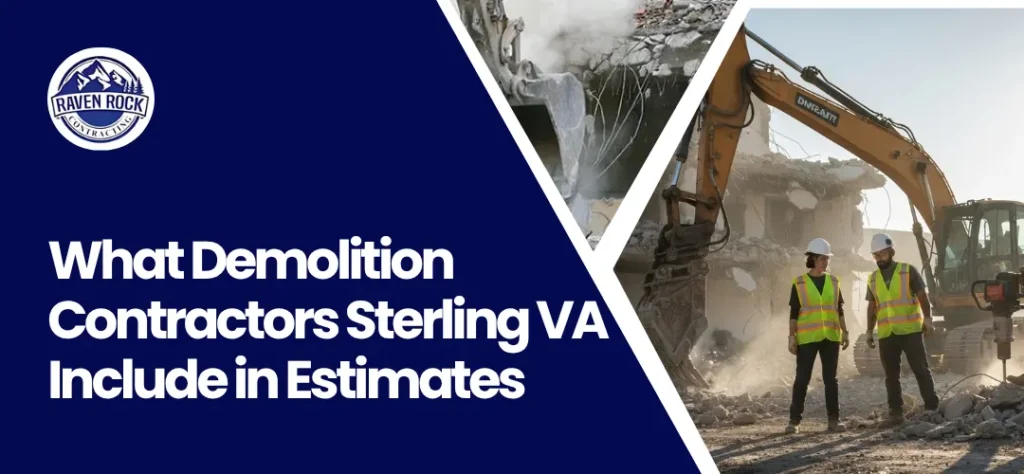
The estimate should identify the exact structure, room, surface, or material scheduled for removal. A residential project might involve a shed, garage, deck, interior wall, or complete structure. Commercial work may include selected fixtures, interior sections, concrete, or other building components.
The description should distinguish full demolition from selective removal. If only part of a building is coming down, the proposal should identify the work boundaries and the components that must remain. Ask whether attached steps, foundations, slabs, fencing, or built-in items are included. Vague descriptions can lead to disagreements once work begins.
The proposal should explain the labor and equipment needed for the job. Requirements depend on building size, materials, access, nearby structures, and the amount of debris. A narrow driveway or restricted work area can affect equipment selection, loading, and project duration.
When reviewing demolition services Sterling VA, ask how the crew will access the site and where equipment, containers, and removed materials will be positioned. The estimate should address necessary site protection and identify areas that must remain untouched. Discuss gates, shared driveways, parking, and restricted work hours before accepting the proposal.
Demolition may involve permits, inspections, utility disconnections, and other preparations. The estimate should state which tasks the contractor will coordinate and which actions the owner must arrange. Do not assume permit applications, fees, inspections, or utility work are included unless the proposal says so.
Electricity, gas, water, and communication services may need disconnection or protection. Underground utilities should be located before digging or disturbing the ground. For older properties, ask how suspected asbestos, lead-based paint, or other hazardous materials will be addressed. Testing or specialized abatement may require separate qualified providers.
Demolition can produce wood, drywall, roofing, metal, concrete, and mixed construction debris. Ask whether workers will collect and load materials, provide hauling, pay disposal charges, and leave the site clear of demolition waste.
Ask whether recycling or material recovery is planned where practical, and whether certain materials require separate handling. Confirm how unexpected debris will be addressed. The Sterling Transfer Station listing identifies construction and demolition debris as an accepted non-hazardous material, but customers should confirm current acceptance rules, fees, and operating details directly with the facility.
The exclusions section is as important as the list of included services. When comparing local demolition companies Sterling, VA, ask whether contents removal, foundation or slab removal, excavation, backfilling, grading, landscaping repairs, utility work, hazardous material abatement, or rebuilding are excluded. These items should be listed clearly in the estimate.
Ask what assumptions the price is based on. The estimate may assume the structure is accessible or that visible materials match the initial assessment. If workers discover buried concrete, hidden damage, unexpected layers, or suspect materials, the contractor should explain how the issue will be documented, priced, and approved before extra work proceeds.
A useful estimate for demolition services in Sterling VA should describe the expected start window, approximate duration, payment schedule, and factors that could affect timing. Weather, permit decisions, utility coordination, inspections, and unexpected conditions can cause changes, so clarify which dates are firm and which are estimates.
The final property condition should also be written down. Does completion mean the structure is removed and debris hauled away, or does it include slab removal, backfill, rough grading, or preparation for the next contractor? Agreeing on the handoff condition prevents different expectations about what a finished job looks like.
Compare the same details across each document: removal limits, labor, equipment, protection, permits, utility responsibilities, hauling, disposal, exclusions, schedule, and cleanup. A lower total may leave more work or costs outside the quoted scope.
Use a checklist and ask providers to clarify unclear terms. Evaluate each proposal based on how clearly it explains the work, communicates assumptions, and answers questions rather than focusing only on the initial price. Keep revised proposals and written approvals together so everyone follows the same scope.
Raven Rock Contracting provides residential and commercial demolition, selective demolition, concrete and asphalt removal, and debris hauling in Sterling and nearby Northern Virginia communities. Its demolition information also describes shed, garage, and deck removal. Before work begins, discuss the structure, access, removal limits, and expected site condition. Contact Raven Rock Contracting to discuss your project and request an estimate.
It should identify the removal scope, labor, equipment, access needs, utility and permit responsibilities, debris hauling, disposal, exclusions, schedule, payment terms, and final site condition.
Contractors may price different removal limits, equipment, labor, disposal arrangements, protection measures, or cleanup responsibilities. Compare the written scope before choosing a proposal.
It should be clearly addressed, but do not assume it is included. Confirm who loads, transports, and pays to dispose of debris, and whether final cleanup is covered.
Ask the contractor to document the condition, explain any change in scope and cost, and obtain approval before additional work. Suspected hazardous materials may need assessment by qualified specialists.
Yes. Confirm whether the property will be left after removal and hauling or whether foundation removal, backfilling, grading, or other preparation is included.
Learn what local demolition companies inspect in Centreville, VA, from utilities and permits to debris removal, with Raven Rock Contracting.
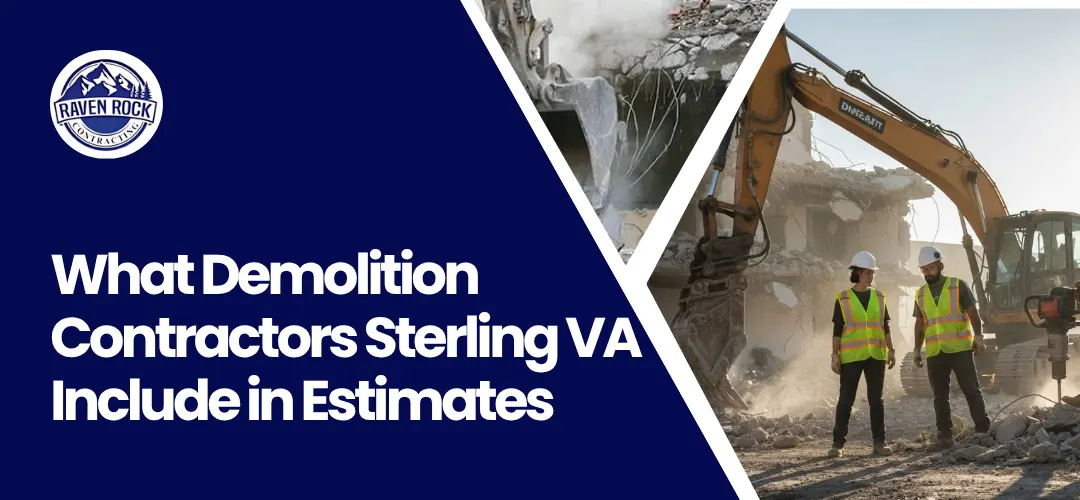
See what demolition contractors Sterling VA estimates should include, from labor and permits to hauling and cleanup. Contact Raven Rock...

Get heavy attic clutter removed safely with attic cleanout services from Raven Rock Contracting. Contact us today to discuss your...
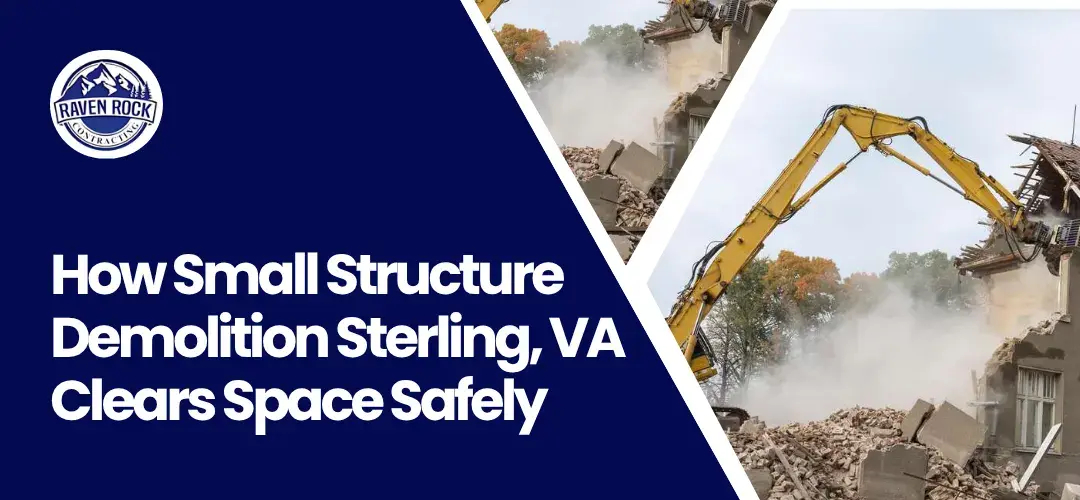
Need small structure demolition Sterling, VA? Learn about safe removal, site preparation, and debris management. Contact Raven Rock Contracting today.
Learn how Demolition Services Sterling VA address damaged structures, improve safety, remove debris, and prepare sites for renovations.
Simplify turnovers with dumpster rental Sterling VA. Plan debris removal, control costs, and schedule service with Raven Rock Contracting today.
Raven Rock Contracting offers junk removal Sterling, VA for property cleanouts, bulky items, and debris. Contact us today for a...
